


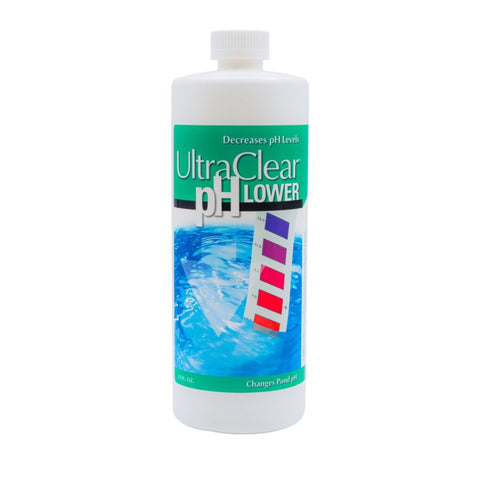
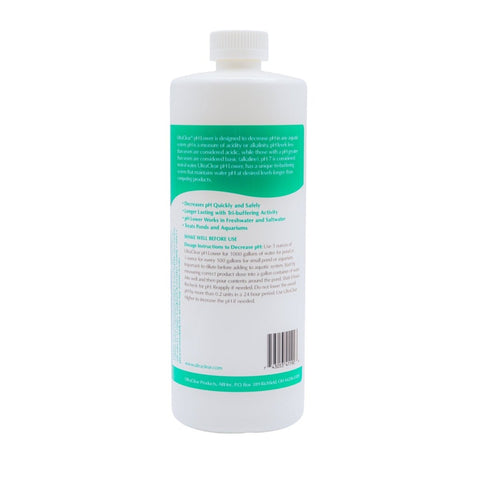
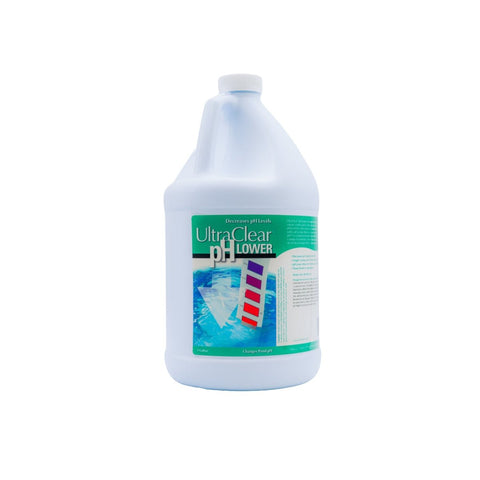
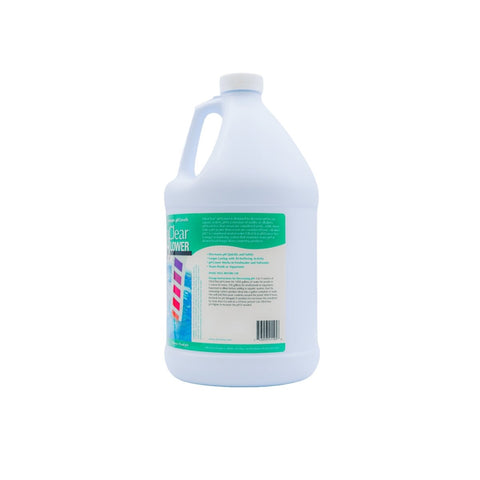
UltraClear pH Lower – Pond pH Decreaser
- Lowers elevated pH in ponds and water gardens
- Liquid formula for measured, gradual adjustments
- Starting dose: 5 fl oz per 1,000 gallons, following the label
- Keep pumps or aeration running for even distribution
- Test first and retest after 24 hours before dosing again
Description
Bring high pond pH down with controlled, gradual adjustments.
UltraClear pH Lower is a liquid pH decreaser for ponds and water gardens. Test first to confirm that your water needs a downward adjustment, then measure the dose and monitor the result.
A straightforward pH-care routine
- Lowers elevated pH: helps adjust pond water when test results show pH is too high.
- Easy liquid dosing: measure for your pond volume and distribute into circulating water.
- Gradual adjustment: use testing and small follow-up doses according to the label.
- For koi ponds and water gardens: use as directed to support suitable water conditions.
Starting dose
Use 5 fl oz per 1,000 gallons as the initial dose, following your bottle's instructions. Equivalent examples:
- 100 gallons: 0.5 fl oz
- 500 gallons: 2.5 fl oz
- 1,000 gallons: 5 fl oz
How to use
- Test pond pH and estimate your water volume.
- Dilute the measured dose in at least 1 gallon of water and distribute evenly, with pumps or aeration running.
- Retest after 24 hours before deciding whether another dose is needed.
- Adjust gradually. Do not change pH by more than 0.5 units in 24 hours, and follow the label for smaller follow-up doses.

Water chemistry affects the response to treatment. Use a target pH suitable for your fish and pond, and rely on test results rather than dosing repeatedly without checking.
Common questions
Should I add pH Lower as routine maintenance?
Only when testing shows that a downward pH adjustment is needed. Continue monitoring your pond after treatment.
Can I use extra for a faster change?
No. Measure the recommended amount, maintain circulation and allow time before retesting. Gradual adjustment is essential.
What if my pH is already low?
Do not use pH Lower to raise pH. See UltraClear pH Higher for upward adjustments, and follow its own directions.
Related guide: Pond pH, Alkalinity and Water Chemistry Guide
Bring high pond pH down with controlled, gradual adjustments.
UltraClear pH Lower is a liquid pH decreaser for ponds and water gardens. Test first to confirm that your water needs a downward adjustment, then measure the dose and monitor the result.
A straightforward pH-care routine
- Lowers elevated pH: helps adjust pond water when test results show pH is too high.
- Easy liquid dosing: measure for your pond volume and distribute into circulating water.
- Gradual adjustment: use testing and small follow-up doses according to the label.
- For koi ponds and water gardens: use as directed to support suitable water conditions.
Starting dose
Use 5 fl oz per 1,000 gallons as the initial dose, following your bottle's instructions. Equivalent examples:
- 100 gallons: 0.5 fl oz
- 500 gallons: 2.5 fl oz
- 1,000 gallons: 5 fl oz
How to use
- Test pond pH and estimate your water volume.
- Dilute the measured dose in at least 1 gallon of water and distribute evenly, with pumps or aeration running.
- Retest after 24 hours before deciding whether another dose is needed.
- Adjust gradually. Do not change pH by more than 0.5 units in 24 hours, and follow the label for smaller follow-up doses.
Water chemistry affects the response to treatment. Use a target pH suitable for your fish and pond, and rely on test results rather than dosing repeatedly without checking.
Common questions
Should I add pH Lower as routine maintenance?
Only when testing shows that a downward pH adjustment is needed. Continue monitoring your pond after treatment.
Can I use extra for a faster change?
No. Measure the recommended amount, maintain circulation and allow time before retesting. Gradual adjustment is essential.
What if my pH is already low?
Do not use pH Lower to raise pH. See UltraClear pH Higher for upward adjustments, and follow its own directions.
Related guide: Pond pH, Alkalinity and Water Chemistry Guide