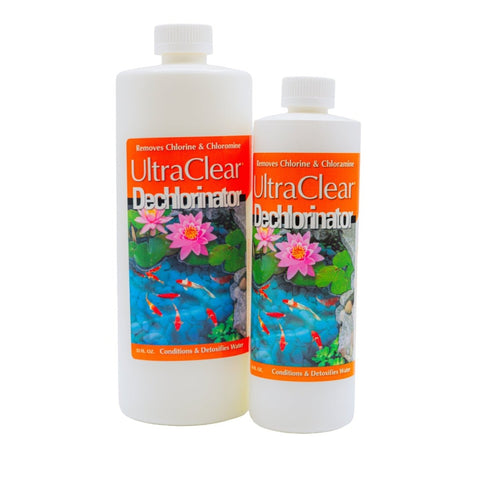
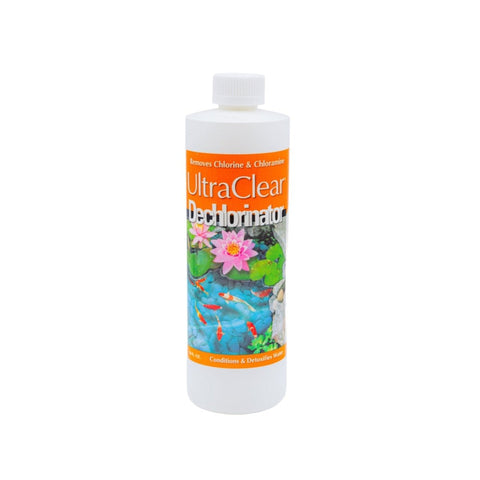
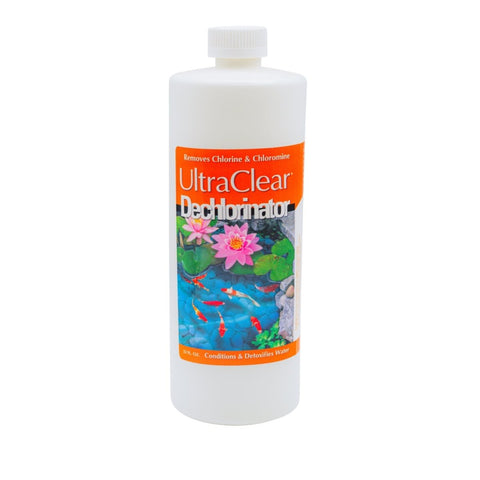
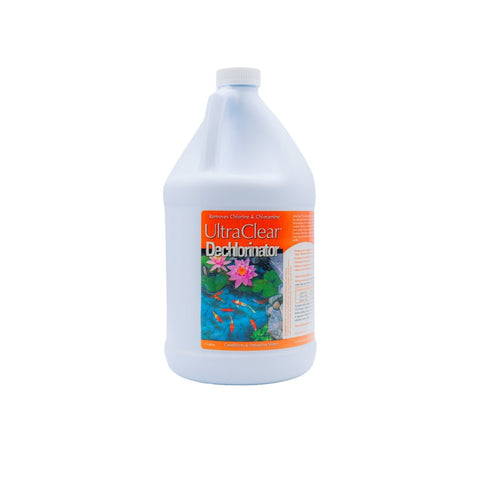
UltraClear Dechlorinator – Pond & Aquarium Water Conditioner
- Neutralizes Chlorine & Chloramines Quickly: Formulated to make tap or well water safe for ponds and aquariums during fills, top-offs, or water changes.
- Detoxifies Heavy Metals & Supports Balance: Special chelators bind and neutralize harmful metals, while reducing agents help limit long-term nitrate accumulation.
- Supports Fish-Friendly Conditions: Encourages a healthier water environment by promoting natural protective slime coats and reducing stress on aquatic life.
- Safe & Eco-Friendly Formula: Contains no phosphates, nitrates, or silicates. Non-toxic when used as directed and safe for fish, aquatic plants, pets, and pond wildlife.
- Easy Liquid Application: Simply add to water during fills or changes for instant conditioning. One 8 oz dose treats up to 1,000 gallons of new water.
Description
Condition new water when you fill, top off or change water.
UltraClear Dechlorinator neutralizes chlorine and chloramines and binds harmful heavy metals in source water. Use this liquid conditioner when adding water to a pond, water garden or aquarium.
Make water changes part of a simple routine
- Neutralizes chlorine and chloramines: treats incoming water during fills and changes.
- Binds heavy metals: chelating agents help condition source water.
- Supports fish-friendly conditions: helps reduce stress associated with untreated new water.
- No added phosphates, nitrates or silicates: safe for fish and aquatic plants when used as directed.
- Made in the USA: backed by more than 30 years of UltraClear experience.
Dose for the new water being added
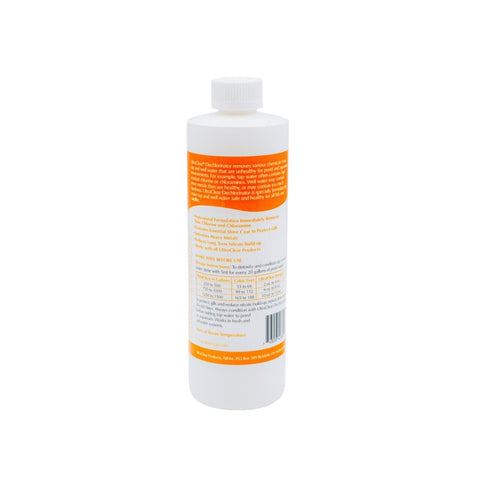
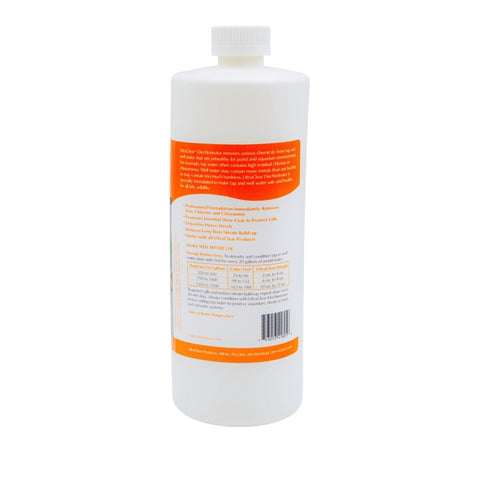
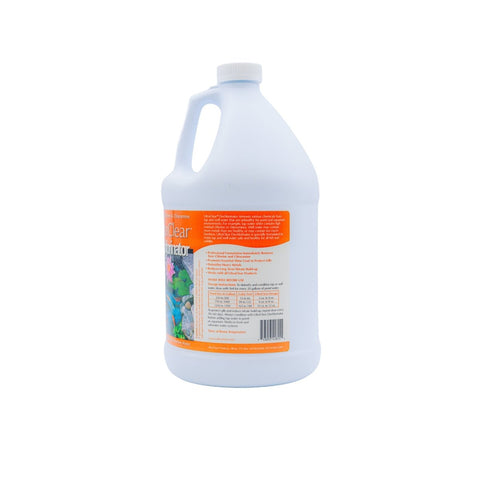
Use 8 fl oz per 1,000 gallons of new water, following the package directions:
- 250 gallons: 2 fl oz
- 500 gallons: 4 fl oz
- 1,000 gallons: 8 fl oz
- 2,500 gallons: 20 fl oz
- 5,000 gallons: 40 fl oz
Add at the time of filling or a water change. Maintain circulation and test chlorine/chloramine levels as directed before considering any repeat application. Do not exceed the label dose.
Common questions
When should I use Dechlorinator?
Use when introducing source water that needs conditioning, including pond startup, top-offs and routine water changes.
Do I calculate the dose from my entire pond?
The stated rate is for the volume of new water being added. Follow the product label for your specific application.
Does this replace routine water-quality testing?
No. Continue checking water quality and maintaining appropriate filtration and aquarium or pond care.
Related guide: How to Dechlorinate Pond Water
Condition new water when you fill, top off or change water.
UltraClear Dechlorinator neutralizes chlorine and chloramines and binds harmful heavy metals in source water. Use this liquid conditioner when adding water to a pond, water garden or aquarium.
Make water changes part of a simple routine
- Neutralizes chlorine and chloramines: treats incoming water during fills and changes.
- Binds heavy metals: chelating agents help condition source water.
- Supports fish-friendly conditions: helps reduce stress associated with untreated new water.
- No added phosphates, nitrates or silicates: safe for fish and aquatic plants when used as directed.
- Made in the USA: backed by more than 30 years of UltraClear experience.
Dose for the new water being added
Use 8 fl oz per 1,000 gallons of new water, following the package directions:
- 250 gallons: 2 fl oz
- 500 gallons: 4 fl oz
- 1,000 gallons: 8 fl oz
- 2,500 gallons: 20 fl oz
- 5,000 gallons: 40 fl oz
Add at the time of filling or a water change. Maintain circulation and test chlorine/chloramine levels as directed before considering any repeat application. Do not exceed the label dose.
Common questions
When should I use Dechlorinator?
Use when introducing source water that needs conditioning, including pond startup, top-offs and routine water changes.
Do I calculate the dose from my entire pond?
The stated rate is for the volume of new water being added. Follow the product label for your specific application.
Does this replace routine water-quality testing?
No. Continue checking water quality and maintaining appropriate filtration and aquarium or pond care.
Related guide: How to Dechlorinate Pond Water