For over 30 years, UltraClear has helped pond owners, koi keepers, homesteaders, and aquarists maintain naturally balanced water. At the heart of every clear, thriving pond, tank, or lake lies a powerful and often misunderstood ally: beneficial bacteria.
These microscopic organisms form the backbone of a healthy aquatic ecosystem. Whether you’re managing a koi pond, a small garden water feature, or a private lake, understanding the different types of beneficial pond bacteria and when to use them can make all the difference between murky water and a vibrant, self-sustaining pond.
1. Why Beneficial Bacteria Matter for Healthy Ponds
Beneficial pond bacteria are the invisible workforce that keeps your pond in balance. They break down fish waste, leaves, and other organic debris, converting them into harmless byproducts.
Without this bacterial activity, waste and excess nutrients accumulate, leading to cloudy water, odor, and heavy muck buildup. Natural bacteria work within the pond’s ecosystem, not against it, restoring balance without relying on harsh chemicals.
2. Nitrifying Bacteria (Nitrosomonas and Nitrobacter)
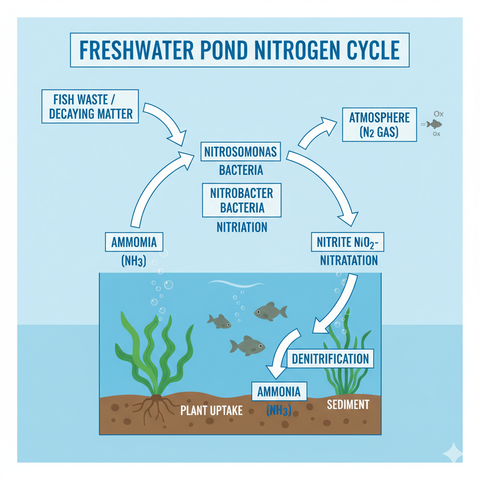
When a new pond is established, nitrifying bacteria are the first essential species to introduce. Two genera, Nitrosomonas and Nitrobacter, perform the nitrogen cycle:
- Nitrosomonas convert ammonia (from fish waste and decomposing material) into nitrites.
- Nitrobacter convert nitrites into nitrates, a less toxic form that plants can absorb.
These bacteria are critical for new ponds, aquariums, and any system where water clarity and fish health are priorities.
When to use: During pond startup or after water changes. UltraClear recommendation: Clarifier — a balanced bacterial formula that rapidly establishes biological starter and supports ongoing water clarity.
3. Denitrifying Bacteria and Their Role in Reducing Nutrients
As nitrates accumulate, denitrifying bacteria complete the natural cycle by converting nitrates into nitrogen gas, safely releasing it into the atmosphere. This process removes excess nutrients that would otherwise feed unwanted algae or sludge buildup.
These bacteria typically thrive in low-oxygen environments such as pond bottoms where organic material collects.
When to use: In ponds with heavy nutrient loading or visible muck accumulation.
UltraClear recommendation: Muck Digester Tablets a professional-strength, slow-release tablet designed to reduce sludge and muck and improve pond depth naturally.
4. Aerobic vs. Anaerobic Bacteria: Understanding the Difference
Beneficial bacteria can also be classified by how they process oxygen:
|
Type |
Oxygen Requirement |
Function |
Common Use |
|
Aerobic Bacteria |
Need oxygen |
Break down surface debris and organic matter |
General pond clarity and odor control |
|
Anaerobic Bacteria |
Thrive without oxygen |
Digest deep muck and sediment |
Bottom sludge removal and pond restoration |
Both types are essential to maintaining a healthy ecosystem. Aerobic species work near the surface or around aeration systems, while anaerobes handle the heavier work in oxygen-poor zones.
5. Cold-Water Bacteria: Keeping Ponds Balanced Year-Round
When temperatures drop below 50°F, most bacteria slow down dramatically. However, specialized cold-water strains remain active in chilly conditions, preventing sludge from accumulating through fall and winter.
Cold-water bacteria protect ponds from stagnation during dormant months, keeping spring startup cleaner and faster.
When to use: Fall through early spring, or whenever water temperatures fall below 50°F. UltraClear recommendation: Autumn Prep or Winter Blend Treatment both of which are formulated with strains that remain effective in low-temperature environments (down to 32F).
6. Blended Formulas and Multi-Strain Systems
In most cases, the best results come from multi-strain bacterial blends that combine nitrifying, denitrifying, aerobic, and cold-tolerant species. These formulas ensure consistent performance across the full depth and seasonal cycle of your pond.
A balanced blend offers broad-spectrum activity, reducing organic buildup, supporting biological filtration, and improving clarity simultaneously.
UltraClear’s approach: Each formula, from Muck Digester Tablets to Clarifier , contains carefully selected strains designed to complement one another rather than compete.
7. When to Use Each Type of Bacteria
|
Pond Condition |
Recommended Bacteria Type |
Ideal UltraClear Product |
|
New pond setup |
Nitrifying |
|
|
Heavy muck or sludge buildup |
Anaerobic / Denitrifying |
|
|
Cold temperatures (below 50°F) |
Cold-water strains |
|
|
Murky or green water |
Aerobic blend |
|
|
Routine maintenance |
Multi-strain |
8. Application and Dosing Tips for Pond Owners
To get the most from your bacteria treatments:
- Dose regularly: Add bacteria every 2–4 weeks for consistent performance.
- Aeration helps: Oxygen promotes faster bacterial growth and more efficient waste breakdown.
- Avoid chlorine or algaecides: These can suppress bacterial colonies.
- Monitor water quality: Track ammonia, nitrite, and nitrate levels using a simple test kit.
- Be patient: Natural biological balance can take several weeks to fully stabilize.
Following a simple routine ensures beneficial bacteria can thrive and keep your water naturally clear.
9. Conclusion: Choosing the Right Natural Solution
Beneficial bacteria are the foundation of every healthy pond. By understanding the differences between nitrifying, denitrifying, aerobic, and cold-water strains, pond owners can choose the right treatments for their unique conditions.
Whether you’re starting a new pond, fighting sludge, or maintaining clarity through winter, UltraClear’s full line of natural pond products makes it simple to build and sustain balance safely, effectively, and in harmony with your ecosystem.